If you’ve ever looked at a pendulum and wondered how such a simple tool is used in spiritual practice, you’re not alone. Pendulums have long been used as tools for reflection, intuition and divination, and they’re surprisingly approachable for beginners.
Choosing your first pendulum doesn’t have to be complicated. You don’t need to find a “perfect” stone or know everything about divination before you begin. A good place to start is simply finding a pendulum that feels comfortable, meaningful and inviting to you.
What Is a Pendulum?
A pendulum is a weighted object suspended from a chain or cord that can move freely when held still.
In spiritual and divination practices, people may use the movement of a pendulum as a focus for asking simple questions, exploring intuition or bringing greater awareness to a decision.
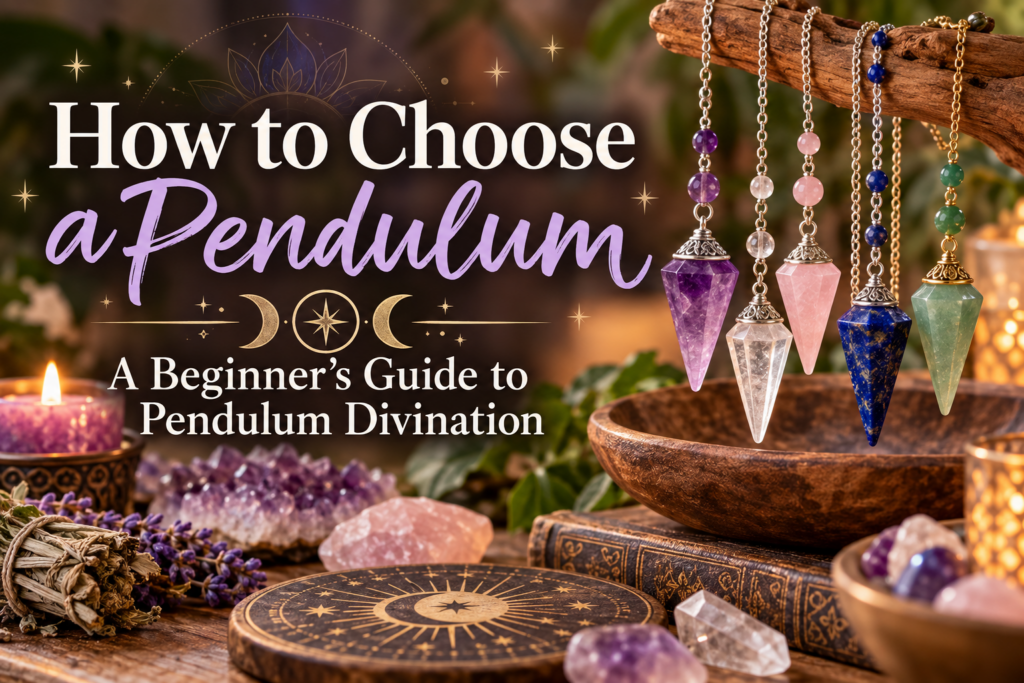
Pendulums can be made from crystals, gemstones, metal, wood and other materials. Crystal pendulums are especially popular because people often choose a stone whose traditional symbolism complements their intention.
How Do You Choose a Pendulum?
There isn’t one pendulum that’s right for everyone.
When you’re choosing one, start by noticing which designs or stones naturally catch your attention. You may be drawn to a particular color, shape or crystal before you even know its traditional meaning.
You can also think about how you want to use it.
If your practice centers around grounding or protection, you might be drawn to darker stones traditionally associated with those intentions. If you’re interested in intuition or spiritual reflection, you may prefer stones commonly associated with those practices.
And sometimes the simplest answer is the best one:
Choose the pendulum you genuinely enjoy holding and using.
Does the Crystal Matter?
The crystal doesn’t determine whether you can use a pendulum, but its symbolism can add another layer of meaning to your practice.
For example, different crystal traditions commonly associate stones with qualities such as grounding, clarity, love, confidence, protection or intuition.
That can make choosing a crystal pendulum more personal. Rather than asking, “Which crystal is the best pendulum?” try asking:
“What intention do I want to bring into my practice?”
Then explore stones traditionally connected with that intention.
How to Get Comfortable With Your Pendulum
Before asking questions, spend a little time simply holding your pendulum.
Rest your arm comfortably and hold the end of the chain or cord so the pendulum can hang freely. Try to keep your hand relaxed rather than deliberately making it move.
Watch what happens.
Once you’re comfortable, you can begin learning how you personally interpret its movements. Some practitioners start with simple questions whose answers they already know and observe the movement that occurs.
Your practice doesn’t need to look exactly like someone else’s. The goal is to develop a consistent method that makes sense to you.
Keep Your Questions Simple
Beginners often find it easier to start with clear questions rather than complicated ones.
Instead of asking something broad such as:
“What should I do with my life?”
you might begin with simple questions that can be approached as yes/no prompts.
Keeping the question clear helps you focus on the process rather than trying to interpret too many possibilities at once.
Caring for Your Pendulum
Treat your pendulum the same way you would other tools used in your spiritual practice.
Keep it somewhere safe when you’re not using it. Depending on its material, you may choose to store it in a pouch or box to help protect it from scratches or damage.
If cleansing is part of your personal practice, choose a method that’s appropriate for the material your pendulum is made from. Not every crystal should be exposed to water, salt or prolonged sunlight, so it’s worth checking the care requirements of the particular stone first.
There Is No Perfect First Pendulum
Your first pendulum doesn’t need to be expensive, rare or chosen according to a complicated set of rules.
Start with something that appeals to you.
Learn how it feels in your hand. Experiment with a simple practice. Give yourself time to become comfortable with it.
As your interests develop, you may eventually find yourself drawn to different stones or styles for different intentions—and that’s part of exploring a spiritual practice.
If you’re ready to explore, browse our Pendulums collection to discover crystal and gemstone options, or visit Tarot & Divination for more tools for your personal spiritual practice.
Read More
- Third Eye Chakra: 7 Simple Ways to Strengthen Intuition & Inner Awareness — this is the strongest companion article because pendulum work and intuition naturally connect.
- Crown Chakra: Meaning, Signs of Imbalance & Simple Ways to Reconnect — good next step for someone exploring spiritual/divination practices.
- How to Create a Simple Self-Care Ritual with Crystals, Candles & Intention — broadens them from the pendulum into other products and practices you carry.